Lecture on “Use of Means of Force – Legal, Security, and Criminalistics Aspects” Held for Third-Year FBN Students
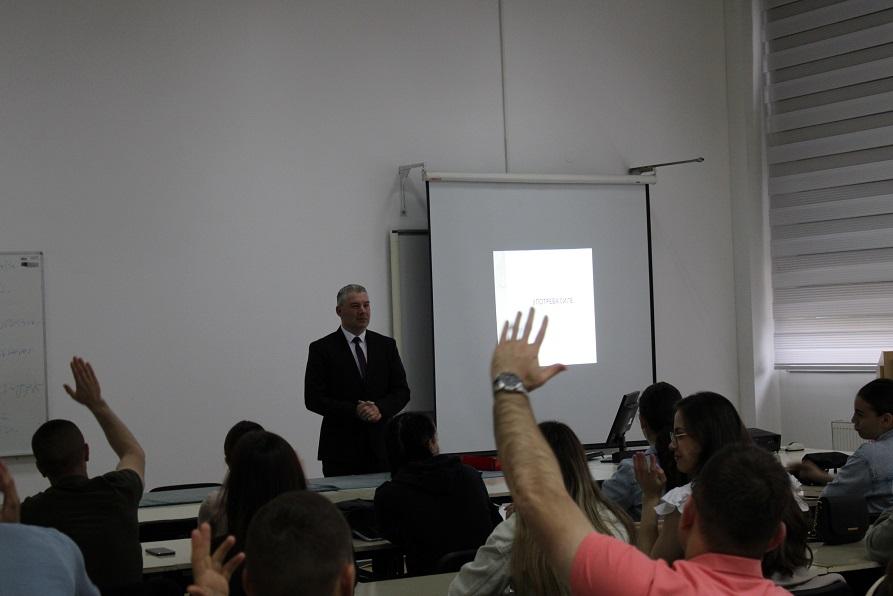
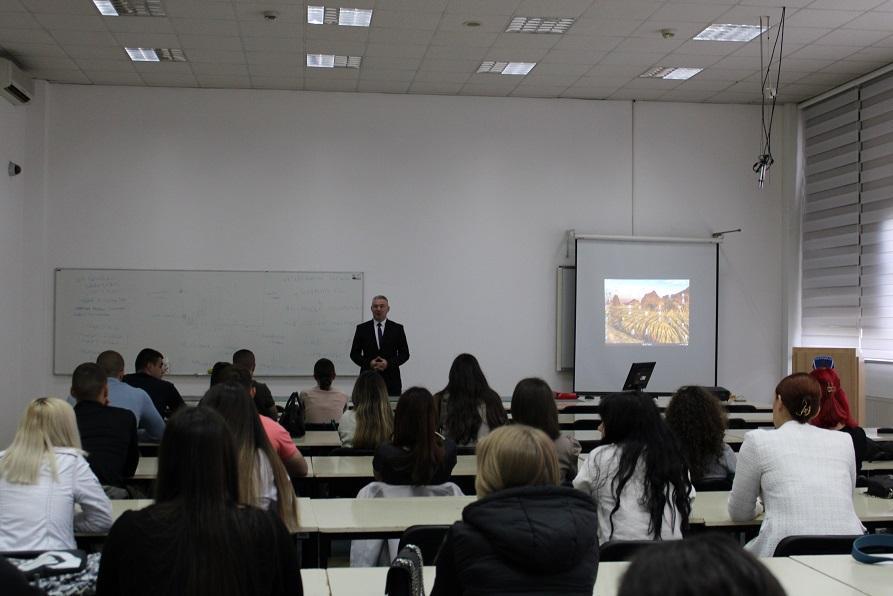
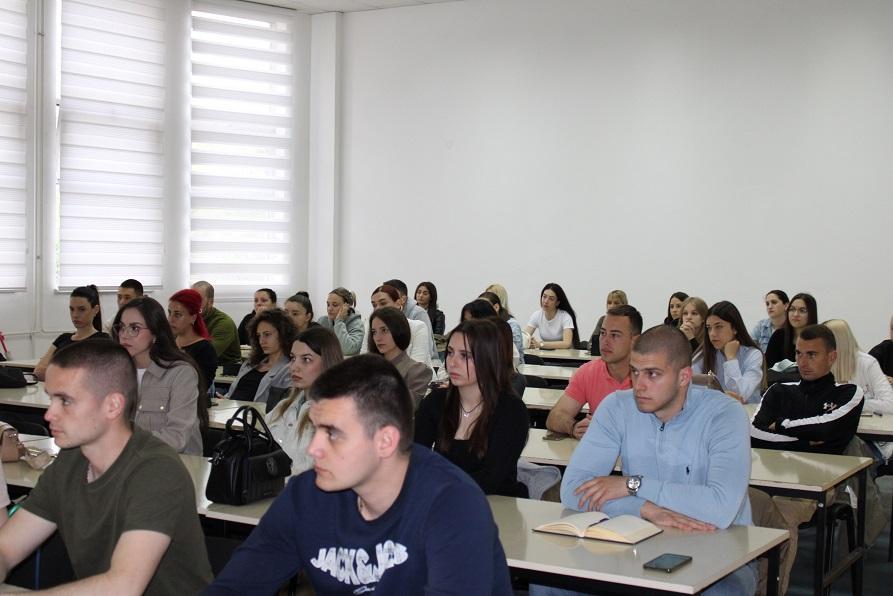
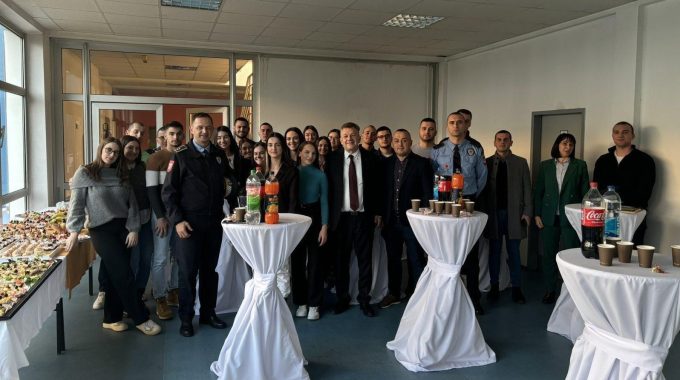
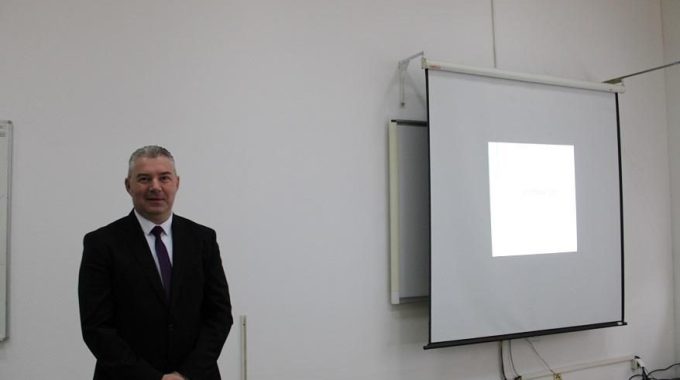
On May 21, 2025, Chief Inspector Davor Stupar, MSc, President of the First-Instance Disciplinary Commission of the Service for the Protection of Integrity and Legality of Operations of the Ministry of the Interior of the Republic of Srpska, held a lecture for third-year FBN students on the topic “Use of Means of Force – Legal, Security, and Criminalistics Aspects.”
The goal of the lecture was to familiarize students with the legally prescribed procedures for the use of means of force (ranging from drafting the initial report on the use of force to the justification of the used force through legal actions, formal procedures, reporting, and justification prescribed by law and rulebooks). Through examples, video materials, and a presentation on tactics regarding the use of force, students were introduced to personal and standard-issue equipment, procedural errors, rendering aid to persons subjected to force, as well as current real-life examples that preceded the conditions for the use of force.
The students were presented with procedures and actions covered by internal investigations following the use of force, including justification processes, potential citizen complaints, reports by authorities, criminal investigations, and conduct in the aforementioned situations.
Students were also introduced to the security aspects of the use of force, focusing on the police officer’s conduct when applying means of force against an individual or individuals (safety measures with examples of accidental discharge of weapons, inadequate equipment handling, lack of training, and loss of situational control). The obligation—following the use of force—to proceed with remedying potential consequences and ensuring further security was emphasized.
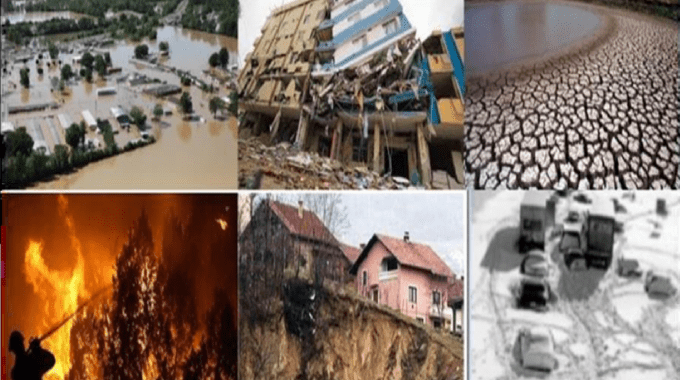
Special attention was given to the work of police officers following the use of lethal force characterized as terrorist attacks, and conduct in accordance with the rules of security sciences following such situations and states (terrorist attacks, large-scale disturbances of public order and peace, destructive demonstrations, subversive riots, armed rebellion, imminent war danger, war, various states of emergency, natural disasters, pandemics, etc.).
In addition, students were informed about possible criminal and misdemeanor outcomes following the use of force, with a special focus on criminalistics procedures during evidence collection, on-site investigations, and operative-criminalistics work following the use of force, which is mandatory in certain cases (students were presented with a complete case file and photo documentation of a lethal use of firearms and the subsequent criminalistics-operative work).
Through interactive dialogue, students had the opportunity to ask questions and supplement their knowledge thanks to the lecturer’s extensive professional and work experience.