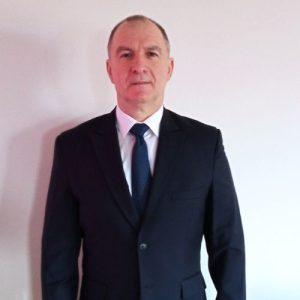
Associate Professor

Scientific Field: Special Physical Education


Office: 128

Email: darko.paspalj@fbn.unibl.org

Phone: 051/333-618


Courses:

  • Sports Skills in Security
  • Special Physical Education I
  • Special Physical Education II
  • Special Physical Education III


Biography:

Born on June 6, 1964, in Glina, SR Croatia, where he finished elementary school and the first two years of general secondary education. He completed the third and fourth years of high school (sports gymnasium track) at the Pedagogical Educational Center “Bogdan Ogrizović” in Zagreb.

He graduated in 1989 from the Faculty of Physical Culture in Zagreb, defending his thesis on “The Influence of Coordination on the Efficiency of Judo Combat in Standing Position,” thereby acquiring the title of Professor of Physical Culture and Graduate Judo Coach. He obtained his Master’s degree in 2008 at the Faculty of Physical Education and Sport, University of Banja Luka, with the thesis “The Influence of Basic Motor Abilities on the Efficiency of Throwing Techniques from the Special Physical Education Program,” acquiring the title of Master of Science in Physical Culture. He obtained his PhD in 2011 at the same Faculty, defending the dissertation “Morphological Characteristics and Psychomotor Abilities of Students of the College of Internal Affairs in the Function of Solving Problem Situations,” acquiring the title of Doctor of Science in Physical Culture.

He was elected to the title of Assistant Professor (Docent) by the University of Banja Luka in 2017, and to the title of Associate Professor in the scientific field of Special Physical Education in 2021.

Professional Career:

1990–1991: Physical Education teacher at the “Bratstvo i jedinstvo” Elementary School in Vrnograč (Velika Kladuša). War Service: During the defensive-patriotic war, he worked as an operative for general crime suppression at SUP Glina and as an Intelligence and Security Officer in the 24th Infantry Brigade in Glina, Republic of Serbian Krajina. In 1995, as a reserve military officer, he was promoted to the rank of Captain First Class of the Army of the Republic of Serbian Krajina. Ministry of Interior (MUP RS): From 1996 to 2017. Within the Personnel Education Center (1996–1999), he worked as a Self-Defense and Special Physical Education teacher at the Secondary School of Internal Affairs. From 1999 to 2008, within the Police Training Administration at the Police Academy, he served as a Special Physical Education teacher, Assistant Director for Basic Training, and Instructor Coordinator of Practical Teaching (Class Chief). In 2007, he passed the exam for the rank of Independent Inspector. Training and Instruction: In addition to regular classes, he conducted training courses for general jurisdiction police, judicial police, municipal police, private security personnel, and prison guards in Republika Srpska.

Higher Education: Worked at the College of Internal Affairs (VŠUP) from 2008 to 2017 as an Associate and Professor of Special Physical Education. He has been working at the Faculty of Security Sciences since 2017, where he taught various Special Physical Education courses and served as Vice-Dean for Academic Affairs. He was also engaged at the Faculty of Physical Education and Sport, University of Banja Luka, teaching Combat Sports.

Scientific Work and Sports: He has published over forty scientific and professional papers, and authored or co-authored one monograph, two practicums, and three textbooks on Special Physical Education. He has completed over 20 seminars in the field of police work and the use of force. He participated in numerous international congresses and projects, including “Conflict Resolution” (Swedish National Police Academy) and the Erasmus+ “Nat Risk” project. He also worked as a coach in Judo clubs “Policajac” and “Krajina” (Banja Luka) and swimming clubs, winning multiple medals at republic and international competitions. He was a member of the expert committee of the Swimming Federation of Bosnia and Herzegovina. He holds Master ranks in Judo and Ju-Jutsu. He is married and a father of one.

Professional Development and Certifications:

  • United States Department of Justice: Instructor Development Course; Curriculum Design Course; Evaluation of Training Course; First Aid Course; Command Post Exercise.
  • Swedish National Police Academy: Workshop seminar in Sarajevo (Police role, Conflict handling, Stress, Mental preparation, Crisis intervention, Management); Handling of Conflicts (Public appearance, Self-defense rules, Realistic scenarios); Handling of Conflicts Instructor Course Step Two.
  • United Nations International Police Task Force: Police Training Certificate (Human Dignity, Transitional, Traffic Awareness & Community Policing, Tonfa Instructor Course).
  • UN Mission in BiH: Critical Incident Management, Management Training, Community Policing.
  • IFV: Training of the Police Training Centres Managers.
  • FINA: FINA Course Certificate.
  • Police Academy Sarajevo: Conflict Resolution.
  • Police Academy Banja Luka: Special Physical Education – Train the Trainers.
  • Association of Sports Medicine Doctors of RS: Seminar “Achieving and Maintaining Sports Form”.


Selected Bibliography:

  1. Paspalj, D. (2008). The influence of basic motor abilities on the efficiency of performing throwing techniques via backward leg reaping in the Special Physical Education program. Bezbednost, Policija, Građani, 2/08.
  2. Paspalj, D. (2009). Latent motor abilities significant for performing the sweeping technique of the advancing leg in the Special Physical Education program. Bezbednost, Policija, Građani, 1/09.
  3. Paspalj, D. (2009). The influence of motor abilities on the efficiency of throwing techniques in the Special Physical Education program. Defendologija, 25-26/09.
  4. Paspalj, D. (2010). Assessment of strength endurance of students of the College of Internal Affairs. Bezbednost, Policija, Građani, 1-2/10.
  5. Paspalj, D. (2010). Effects of different teaching continuities on the level of adoption of falling, sweeping, and throwing techniques. Bezbednost, Policija, Građani, 3-4/10.
  6. Paspalj, D. (2011). Differences in certain motor abilities of College of Internal Affairs students regarding the efficiency of defense against overhead stick attacks. Bezbednost, Policija, Građani, 3-4/11.
  7. Paspalj, D., & Miljuš, M. (2012). Differences in attitudes of College of Internal Affairs students towards Special Physical Education classes. Bezbednost, Policija, Građani, 3-4/12.
  8. Paspalj, D. (2013). Influence of psychological characteristics on the efficiency of defense against hand attacks. Sportlogia, 9(2).
  9. Paspalj, D., Rokvić, D., & Miljuš, M. (2013). Mental preparation in the function of solving problem situations in Special Physical Education. Yearbook of the European Defendology Center, 2(2).
  10. Paspalj, D. (2013). Sexual dimorphism of the anthropological profile of College of Internal Affairs students in the function of solving problem situations. Bezbednost, Policija, Građani, 3-4/13.
  11. Gužvica, M., & Paspalj, D. (2014). Differences in the effects of defense against stick attacks after different methodological-training approaches. 5th International Scientific Congress, Banja Luka.
  12. Paspalj, D. (2014). Different influence of certain motor ability tests on the efficiency of defense against overhead stick attacks. 5th International Scientific Congress, Banja Luka.
  13. Gužvica, M., & Paspalj, D. (2015). Coordination and quality of adoption of basic technical elements from the Special Physical Education program. Nauka – Društvo – Tranzicija, Vol 3.
  14. Paspalj, D., Gužvica, M., & Preradović, Lj. (2015). Predicting the success of defense against overhead stick attacks based on students’ motor abilities. Nauka – Društvo – Tranzicija, Vol 3.
  15. Gužvica, M., & Paspalj, D. (2015). Efficiency of defense after different methodological and training approaches under conditions of maximum heart rate. Bezbednost, Policija, Građani, 1-2/15.
  16. Paspalj, D., & Gužvica, M. (2016). Application of endurance tests in work with students of the Faculty of Security Sciences. Sportlogia, 12(1).
  17. Paspalj, D., & Gužvica, M. (2017). Importance of balance for performing throwing techniques via backward leg reaping. Sportlogia, 13(1).
  18. Gužvica, M., & Paspalj, D. (2017). Football as an elective sport in PE programs in schools as a contribution to general safety. International Conference Security and Sport.
  19. Paspalj, D., Gužvica, M., & Vulin, L. (2018). Structure of morphological characteristics of Faculty of Security Sciences students. Defendologija, 41/42.
  20. Gužvica, M., Paspalj, D., & Vulin, L. (2018). Differences in the quality of defenses against different types of static attacks under physiological stress. Defendologija, 41/42.
  21. Vojvodić, M., Simović, S., & Paspalj, D. (2019). The reasons why young people avoid engaging in sports and athletic activities. Sports Science and Health, 9(1).
  22. Paspalj, D., Gužvica, M., & Vulin, L. (2019). Structure of motor abilities of Faculty of Security Sciences students. Journal of Security and Criminalistics, 1(1).
  23. Paspalj, D., Gužvica, M., & Vulin, L. (2019). Influence of the “Sports Skills in Security” course program on the basic motor status of students. Journal of Security and Criminalistics, 1(2).
  24. Šikman, Lj., Latinović, T., & Paspalj, D. (2019). ISO 27001 – Information systems security development. ANNALS of Faculty Engineering Hunedoara, 17(4).
  25. Vulin, L., Paspalj, D., Gužvica, M., & Vojvodić, M. (2020). Basic motor abilities as predictors of overcoming the motor knowledge testing polygon. Journal of Security and Criminalistics, 2(1).
  26. Kukić, F., … Paspalj, D., et al. (2020). Perceived and Measured Physical Fitness of Police Students. International Journal of Environmental Research and Public Health, 17(20).
  27. Vojvodić, M., Simović, S., & Paspalj, D. (2020). Analysis of Causes Which Make Young People Quit Sports. Journal of Advances in Sports and Physical Education, 3(9).
  28. Gužvica, M., Paspalj, D., Vrućinić, Ž., & Vulin, L. (2020). Temporal differences between genders in the realisation of specific combat techniques relative to spatial ability. NBP Journal of Criminalistics and Law, 25(2).
  29. Paspalj, D., Gužvica, M., & Vulin, L. (2021). Correlation of motor abilities and swimming knowledge with 100m freestyle swimming results. Journal of Security and Criminalistics, 3(2).
  30. Paspalj, D., Gužvica, M., & Vulin, L. (2021). Importance of coordination for performing falling techniques from the Special Physical Education program. Journal of Security and Criminalistics, 3(1).
  31. Streetman, A., Paspalj, D., et al. (2022). Association of Shorter and Longer Distance Sprint Running to Change of Direction Speed in Police Students. NBP, 27(1).
  32. Paspalj, D., Rađević, N., Vulin, L., & Kovačević, S. (2022). Sexual dimorphism in the assessment and self-assessment of motor abilities. Sport i zdravlje, 1.
  33. Rađević, N., Paspalj, D., et al. (2022). Self-assessment of motor abilities of Faculty of Security Sciences students. Journal of Security and Criminalistics, 4(2).
  34. Paspalj, D., Vulin, L., & Kovačević, S. (2022). Special Physical Education in the function of security. II International Scientific Conference, Banja Luka.
  35. Paspalj, D., et al. (2023). Correlation of motor abilities with the realization of defense against front neck choke attacks. Bezbednost, policija, građani, 19(1).
  36. Kukić, F., … Paspalj, D. (2023). Correlation of change of direction speed under fatigue with fitness indicators of students. III International Scientific Conference, Banja Luka.
  37. Kovačević, S., Paspalj, D., et al. (2024). Differences in motor skills of students based on body mass index. Sport i zdravlje, 19(1).
  38. Kukić, F., … Paspalj, D., et al. (2024). Effects of Specific RAMP Protocol Phase on Change of Direction Speed of Police Students. Journal of Functional Morphology and Kinesiology, 9.
  39. Paspalj, D., et al. (2024). The relationship of morphological characteristics with the performance of the technique of throwing with the standing leg left from the back. Sport Scientific and Practical Aspects, 21(1).
  40. Paspalj, D., et al. (2024). Differences in motor abilities of candidates for enrollment at the College of Internal Affairs and the Faculty of Security Sciences. IV International Scientific Conference, Banja Luka.
  41. Kovačević, S., … Paspalj, D., et al. (2024). Physical Activity and Mental Health During the COVID-19 Pandemic. Sportlogia, 20(2).
  42. Paspalj, D., Rađević, N., Vulin, L., & Kovačević, S. (2025). The Relationship Between Motor Abilities and the Performance of the Osoto Gari in Police Students. Sportlogia, 21(1).